You know that sinking feeling when you're holding something brilliant but nobody else seems to get it? That's how I felt clutching my Game Gear in 1991, watching mates queue up for grey Game Boys like lemmings heading for a cliff. Sure, the Game Boy had Tetris—fair play, absolute masterpiece—but my Game Gear had Sonic in full colour, proper sound that didn't wheeze through a tin speaker, and a backlight that meant I could actually see what I was doing under the duvet after lights out.
The battery situation though? Christ. Four hours if you were lucky, two if you dared turn the brightness up. I became a walking Duracell dealer, pockets rattling with AAs like some kind of portable power junkie. My mum started buying batteries in bulk from the cash and carry, treating my handheld habit like a small electrical appliance addiction. Which, let's be honest, it basically was.
But here's the thing—Sega's portable efforts weren't just about cramming home console experiences into lunchbox-sized cases. They were genuinely forward-thinking in ways that wouldn't become obvious until years later. The Game Gear's colour screen wasn't just a gimmick; it was a statement. While Nintendo played it safe with that green-tinted afterthought of a display, Sega was basically saying "why should portable games look worse than your telly?"
I remember the first time I fired up Columns on that little 3.2-inch screen. The jewels actually looked like jewels, not abstract geometric suggestions. Sonic 2's casino zone felt properly garish and neon, the way it was meant to. Even now, playing Game Boy games on original hardware feels like squinting through a thick fog, wondering what you're missing.
The sound difference was night and day too. That Game Gear had a proper stereo setup—tiny speakers, sure, but proper stereo nonetheless. Plug in some headphones and suddenly you're getting audio that wouldn't embarrass itself next to a Mega Drive. Meanwhile, the Game Boy sounded like it was transmitting morse code through a broken radio. I'm not being harsh here; I owned both systems, loved them both, but let's not pretend they were playing in the same league when it came to audiovisual grunt.
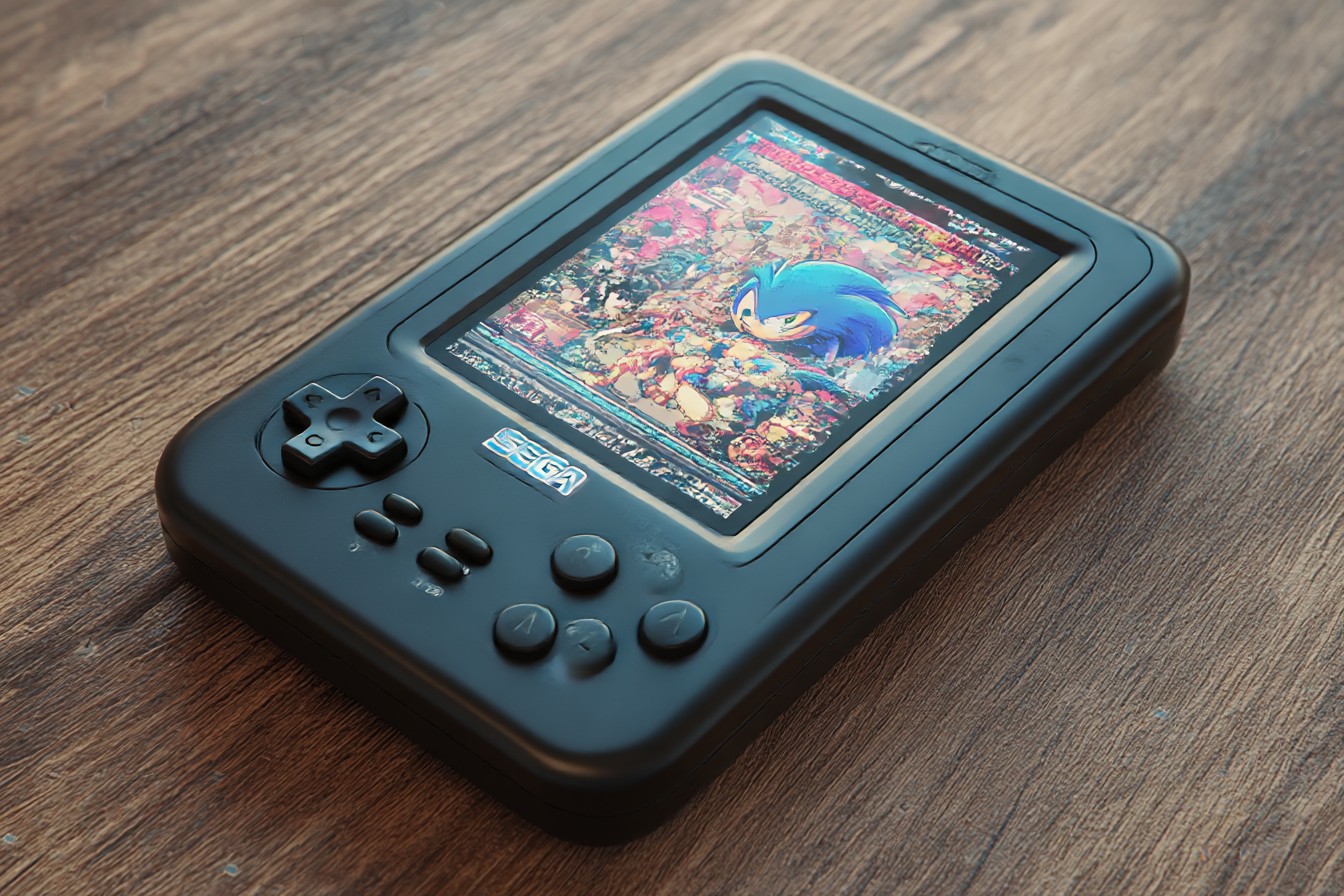
Then there was backwards compatibility with Master System games via that little adapter cartridge. Genius, really. Your entire 8-bit library suddenly became portable—well, portable if you didn't mind looking like you were carrying a small briefcase and had access to the national grid for power. But the concept was spot on. Nintendo would eventually catch up with this idea, oh, about fifteen years later with the GameCube's Game Boy Player.
The real kicker though was the TV tuner. Remember that? You could literally watch telly on your Game Gear. In 1991! I felt like I was living in the future, watching Neighbours during double maths while pretending to take notes. The picture quality was, admittedly, about as good as peering through a keyhole at a distant television, but the sheer audacity of it was magnificent. Sega looked at their handheld and thought "you know what this needs? The ability to receive broadcast television." Absolute madlads.
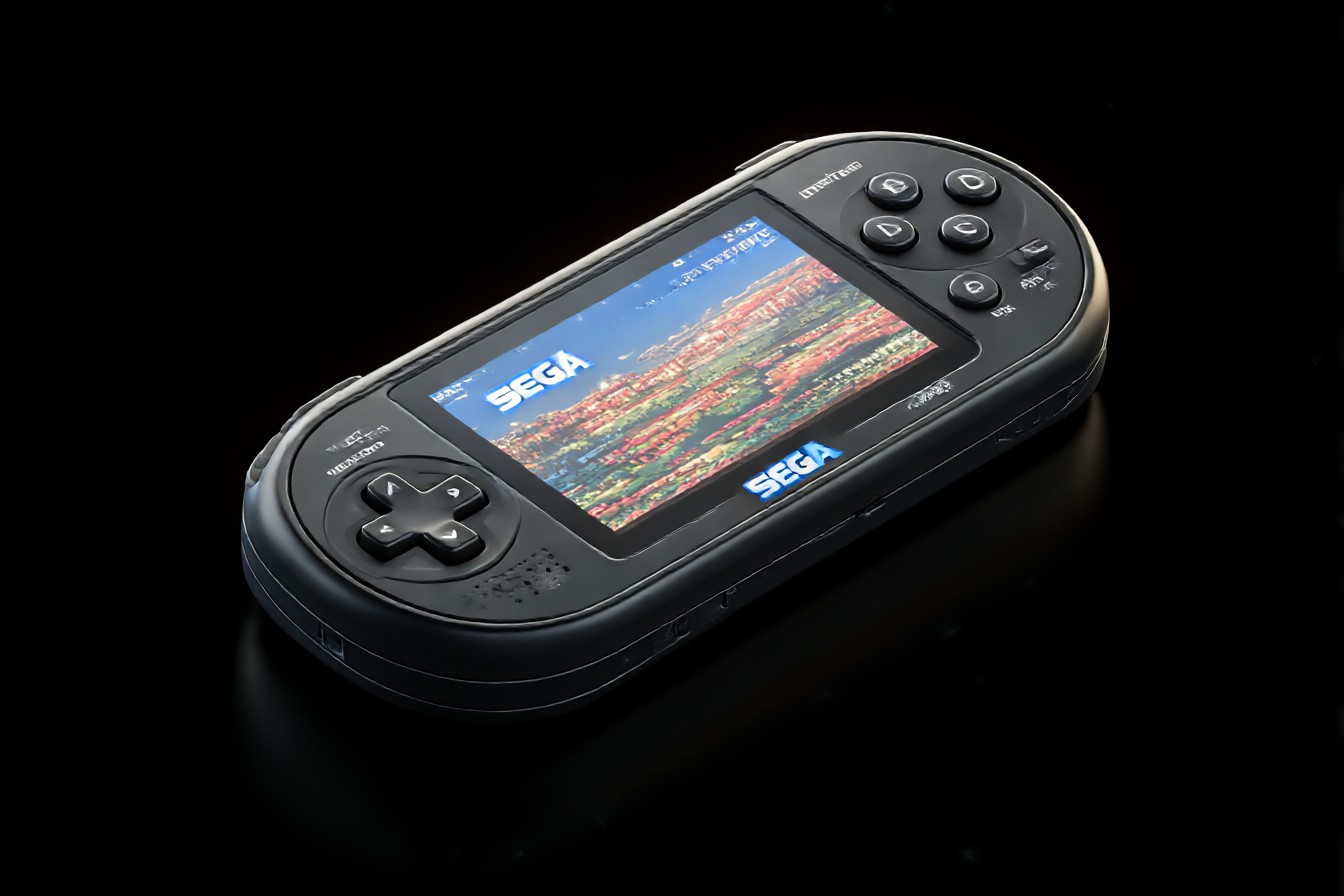
But Sega's handheld ambitions didn't stop there. Oh no. Someone in their R&D department clearly had delusions of grandeur and access to the engineering budget, because next came the Nomad. Sweet mother of battery drain, what a machine that was.
Picture this: a proper Mega Drive, shrunk down to roughly the size of a thick paperback novel, with its own built-in screen. No compromises, no "portable versions" of games—actual, honest-to-goodness 16-bit cartridges running at full pelt in your hands. I saved up for months to buy one, convinced I'd discovered the holy grail of portable gaming.
Reality bit hard and fast. Six AAs lasted about as long as a decent cup of tea. The thing got hot enough to toast bread. The screen, while technically displaying Sonic 3 in all its glory, was so dark you needed industrial-strength lighting to see anything. But when the stars aligned—fresh batteries, perfect lighting conditions, maybe a solar eclipse for that extra bit of cosmic help—it was pure magic.
Streets of Rage 2 on the bus to college. Actual Streets of Rage 2, not some watered-down portable version. The full YM2612 soundtrack, all the sprites, the lot. I felt like I was carrying arcade quality gaming in my rucksack, even if said rucksack was basically a mobile power station by that point.
Looking back, both systems were completely bonkers in the best possible way. Sega was throwing technology at problems years before anyone else even recognised the problems existed. Colour screens, TV tuners, full console compatibility—these weren't just features, they were glimpses into what handheld gaming could become.
Nintendo, meanwhile, was playing chess while Sega played with expensive fireworks. The Game Boy lasted forever on a single set of batteries, had a game library deeper than the Mariana Trench, and worked perfectly in any lighting condition from arctic dawn to tropical noon. It was sensible, practical, brilliantly designed. It sold about a billion units and basically owned the portable market until smartphones showed up to rain on everyone's parade.
But here's what gets me—Sega's "failures" weren't really failures at all. They were prototypes for the future. The Game Gear's colour screen and stereo sound? Standard on every handheld that followed. The Nomad's full console compatibility? Nintendo built an entire business model around it with their Game Boy Advance's backwards compatibility and later systems. Even that ridiculous TV tuner concept lived on—remember the GBA Video cartridges? Watching episodes of SpongeBob on a tiny screen suddenly didn't seem so mad.
These days, when I'm playing my Steam Deck or Switch, getting hours of battery life from a colour screen brighter than my old telly, with sound quality that would make a HiFi jealous, I think about those early Sega pioneers. They were right about everything except the timing. They built tomorrow's handheld today, powered by yesterday's battery technology.
Sometimes being ahead of your time just means being first to run out of juice. But what a glorious way to go flat.