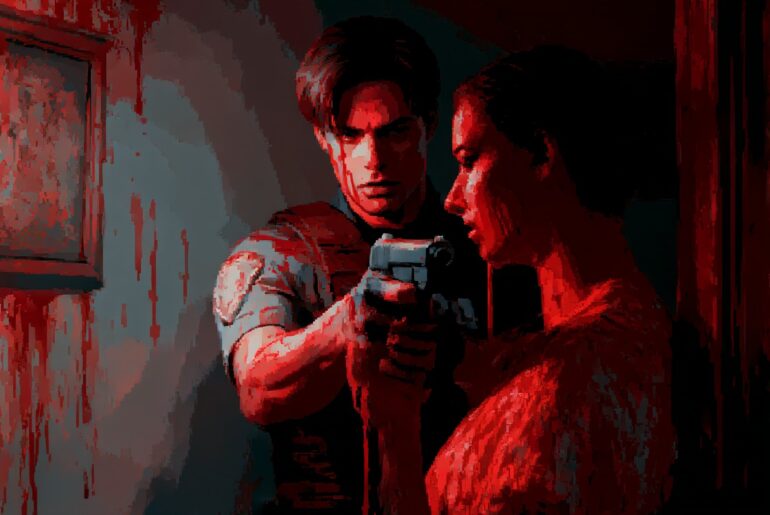
The plastic clamshell clicked open with that satisfying snap I'd forgotten about until I heard it again last weekend. Inside sat my battered copy of Streets of Rage 2, label slightly peeling, contacts a bit tarnished but still game for another round. My eight-year-old was watching me slot it into the Mega Drive with the sort of reverence usually reserved for archaeological discoveries. "Does it actually work without downloading?" she asked, and I realized we'd hit one of those generational moments that makes you feel ancient and proud simultaneously.
Thing is, that cartridge represents just one way to experience what might be the greatest beat-'em-up soundtrack ever composed. These days, I'm just as likely to fire up Streets of Rage 2 on my phone during a lunch break, or boot it through RetroArch on the living room PC when the original hardware is buried under a mountain of school bags and washing. The magic hasn't diminished—it's just found new vessels.
Genesis emulation has come a ridiculously long way since those early days of dodgy ROMs and sound that made Yuzo Koshiro's masterpieces sound like they were being played through a tin can. I remember downloading GENS sometime in the late 90s, spending hours tweaking settings that barely worked, wondering why Sonic's spin-dash sounded like a broken vacuum cleaner. Fast-forward to today and the options are frankly overwhelming in the best possible way.
Let me start with what I actually use on a daily basis, because that's more useful than an exhaustive list that'll be outdated by next Tuesday. On PC, I've settled into a comfortable relationship with RetroArch and its Genesis Plus GX core. Yeah, the interface looks like it was designed by someone who thinks user-friendly is a foreign language, but once you've wrestled it into submission, the emulation accuracy is genuinely impressive. The YM2612 synthesis sounds properly metallic, that distinctive Mega Drive crunch that separated it from Nintendo's more orchestral approach.
My kids prefer Kega Fusion for its straightforward approach—drag ROM, play game, argue about who gets the six-button controller. The built-in Game Genie support has rescued more than a few rage-quit moments when Contra: Hard Corps decided to remind us why it earned that reputation for brutality. Though I should mention, finding those cheat codes feels like archaeology now. Remember when they were printed in magazines that cost actual money?
For mobile gaming, I've been pleasantly surprised by MD.emu on Android. Touch controls are obviously rubbish for anything requiring precision timing, but pair it with a decent Bluetooth controller and you've got Gunstar Heroes running perfectly on a device that would've seemed like science fiction when I was hunched over that massive CRT in my childhood bedroom. The ability to save state anywhere has probably saved my sanity during countless commutes where Phantasy Star II decided to throw another level-grinding section at me.
Speaking of controllers, this is where emulation both shines and stumbles. That original three-button Genesis pad was perfectly adequate for its time, but the six-button controller that came later was genuinely excellent—proper D-pad, responsive face buttons, and those shoulder buttons that made Street Fighter II actually playable at home. Modern USB replicas exist, and some are decent enough, but there's something about the original plastic that just feels right under your fingers.
I've got one of those Retro-Bit Genesis controllers plugged into my PC permanently now, and while it's not quite identical to the original, it's close enough that muscle memory kicks in the moment I touch it. The slight resistance on the D-pad, the satisfying click of the buttons—these details matter more than you'd think when you're trying to nail those precise inputs in Streets of Rage.
Now, about ROMs—and yes, I know this is where things get legally murky. The honest truth is that if you own the original cartridges, you're probably fine making backup copies for personal use, though even that exists in a legal grey area that makes lawyers reach for their strongest coffee. I've got a Retrode device that lets me dump my own cartridges, which feels like the right way to do things, even if the process is slower than watching paint dry on a rainy day.
For everything else, there are legitimate options nowadays. Sega's own collections on Steam are actually pretty good—the sound emulation has improved dramatically, and they include some genuinely obscure titles alongside the obvious hits. The M2 collections are particularly impressive if you've got a Switch or PS4 kicking around. M2 knows their way around Sega hardware better than most, and it shows in the attention to detail.
What really impresses me about modern Genesis emulation is how it's opened up games that were previously impossible to experience properly. Ever tried playing Pulseman on original hardware? Good luck finding a cart that doesn't cost more than a decent holiday. But through emulation, Game Freak's forgotten platform masterpiece is accessible to anyone willing to hunt down a ROM. The same goes for countless Japanese exclusives that never made the journey westward.
The visual options available now are frankly ridiculous. CRT shader filters that actually make pixelart look like it did on proper televisions, scanline effects that don't make your eyes water, aspect ratio corrections for games that were designed around 4:3 displays but look weird stretched across modern widescreen monitors. I spent an embarrassing amount of time last month fine-tuning the CRT-Royale shader in RetroArch, trying to recreate the exact look of my old Trinitron. Did I succeed? Debatable. Was it worth the three hours? Absolutely.
But here's what really matters—none of this technical wizardry means anything if the games themselves don't hold up. Fortunately, the Genesis library is stuffed with classics that feel just as playable today as they did thirty years ago. Sonic 2 still makes speed feel like a superpower. Phantasy Star IV still tells a genuinely engaging RPG story without requiring a hundred-hour commitment. Gunstar Heroes still makes every other run-and-gun game look a bit ordinary by comparison.
The beauty of emulation is that it removes the barriers between you and these experiences. No need to hunt down increasingly expensive cartridges, no worrying about save batteries dying mid-playthrough, no squinting at composite video on a modern TV that makes everything look like soup. Just pure, unadulterated 16-bit gaming exactly as intended, but with the convenience of save states when the doorbell rings or your toddler decides that now is the perfect time for a major emotional crisis.
I'm not suggesting emulation replaces the original experience entirely. There's still something magical about sliding a cart into that satisfying slot, hearing the power LED blink to life, feeling that slight warmth radiating from the console after an hour of play. But for actually playing these games regularly, for sharing them with kids who think physical media is quaint, for experiencing titles you missed the first time around—emulation has become indispensable.
The Genesis deserves this second life. Sega's 16-bit machine was always the scrappier underdog, the console for kids whose parents thought Nintendo was too expensive or too mainstream. It introduced us to Sonic, to Streets of Rage, to a whole library of games that prioritized attitude over polish. Through emulation, that attitude lives on, one perfectly preserved pixel at a time.