Sitting in the spare room last night, surrounded by a frankly embarrassing collection of retro gaming kit, I found myself staring at the Sega Genesis Flashback sitting on the shelf. You know that feeling when you spot something familiar but slightly…off? Like seeing your childhood friend wearing a suit at a wedding. That's this thing in a nutshell.
I'll be honest, when these plug-and-play consoles started showing up everywhere—garage sales, Argos, that weird electronics section in Tesco—my first reaction was pure snobbery. Why would anyone want a watered-down version when you can track down an original Mega Drive, replace the capacitors, mod it for RGB, and experience gaming exactly as Yuji Naka intended? But then my nephew visited last Christmas, saw my CRT setup with its nest of SCART leads, and asked if I had any "normal" games he could just…turn on.
Fair point, kid. Fair point.
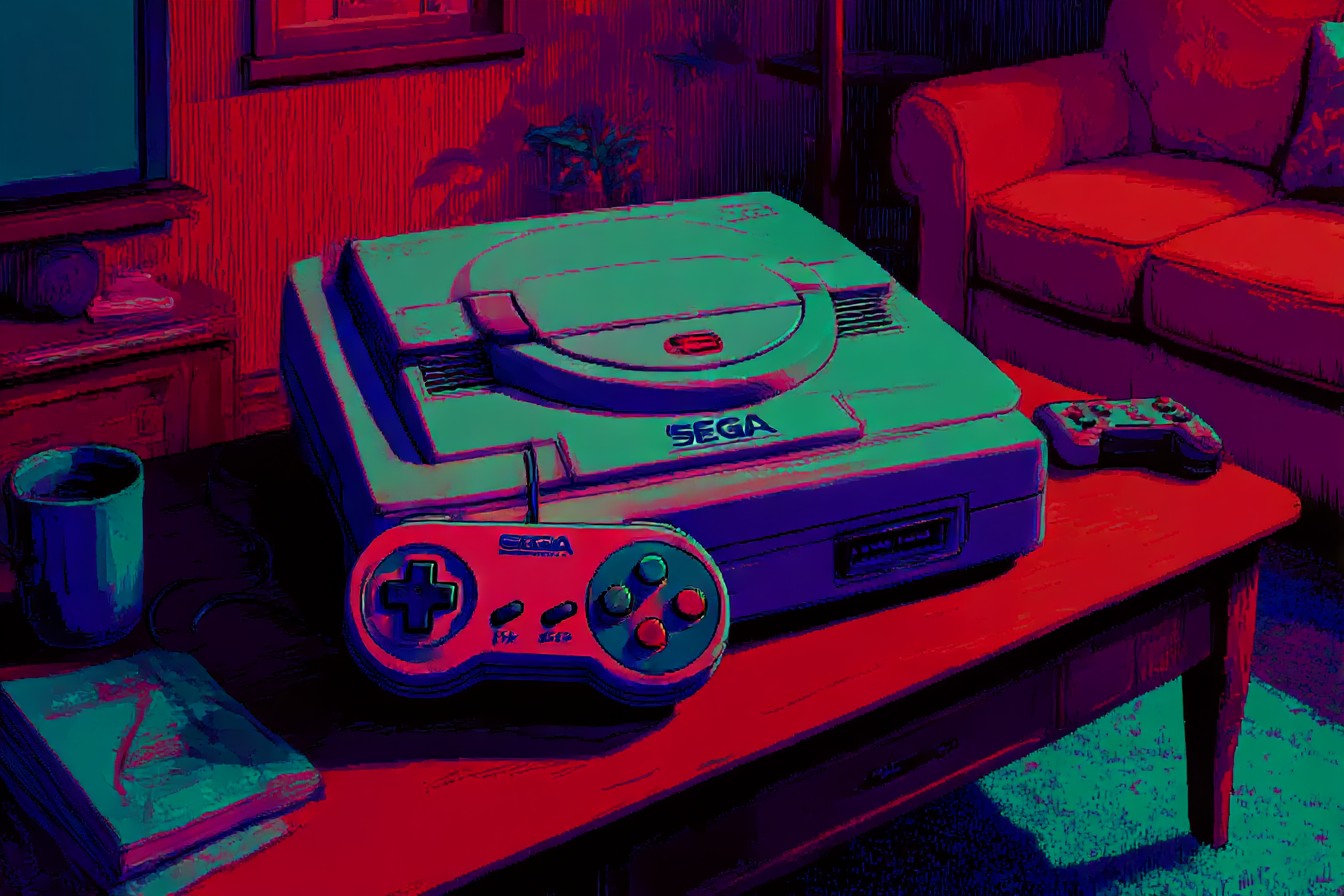
The Genesis Flashback comes in a box that screams "I'm retro!" with all the subtlety of a Crazy Taxi soundtrack. AtGames has been churning these out for years now, and this particular iteration sits somewhere between "surprisingly decent" and "well, it'll do." The console itself looks like someone photocopied a Mega Drive and shrunk it down—recognizable but not quite right. The proportions are off just enough to trigger that uncanny valley response in anyone who spent their teenage years blowing dust out of cartridge slots.
But here's where it gets interesting. Fire this thing up, and you're greeted with 81 built-in games. Eighty-one! My 12-year-old self would've sold his collection of football stickers for that kind of instant gratification. The selection reads like someone raided the "B-sides and rarities" section of Sega's catalog. You've got your Sonic and Knuckles, naturally—though whether it's the version that made your Saturday mornings sing is another question entirely. Golden Axe's there, which always makes me think of that sticky-carpeted pizza place where I first encountered Gilius Thunderhead and his surprisingly effective axe-twirling techniques.

The emulation quality? Well, that's where things get a bit wobbly. Playing Altered Beast, I noticed the audio's got that slightly compressed quality you get when someone's tried to fit a pint into a half-pint glass. It's recognizable, sure, but it doesn't have that metallic bite of the YM2612 chip that made Streets of Rage sound like it was recorded in a nightclub's back alley. The timing feels just a fraction off too—not enough to ruin the experience, but enough that my muscle memory keeps expecting different things to happen.
I spent a good hour with Ristar, a game that deserved way more attention than it got back in the day. The little star fella's stretchy arm mechanics still hold up beautifully, and honestly, playing it on the Flashback reminded me why I fell in love with it originally. Sometimes the slight input lag actually helps—makes you play more deliberately, less twitchy. Though I suspect that's Stockholm syndrome talking.
The wireless controllers are…adequate. They've got that slightly hollow feel of modern plastic trying to cosplay as 1990s engineering. The D-pad's responsive enough, and the six-button layout means you can actually play Street Fighter II without wanting to throw something at the wall. I tested this extensively, obviously. For science. The range is decent—I could wander to the kitchen for a biscuit without losing connection, which is more than I could say for some of the wireless adapters I've tried on original hardware.
What really surprised me was how much I enjoyed just browsing the game list. It's like flipping through an old photo album, except instead of embarrassing haircuts, you're rediscovering gems you'd completely forgotten. Alex Kidd in the Enchanted Castle! When did I last think about that beautiful, bonkers platformer? Flicky! Remember Flicky? No, neither did I, until suddenly I was guiding chirping birds around mazes and remembering why simple concepts executed well never go out of style.
The interface itself is clean and functional, though it lacks the personality of, say, browsing through an actual cartridge collection. There's something to be said for the ritual of physical media—the satisfying click of a cart going into the slot, the anticipation as the system boots, the slight anxiety that maybe this time it won't work and you'll need to perform the ancient sacrament of cart-blowing. The Flashback gives you instant gratification, which is both its strength and its weakness.
For someone wanting to introduce their kids to 16-bit gaming without the faff of tracking down original hardware, this thing's actually pretty brilliant. My friend's daughter took to Sonic 2 immediately, and watching her face light up during the Chemical Plant Zone music was worth any complaints about audio compression. She didn't care that the bass wasn't quite punchy enough—she was too busy learning the joy of momentum-based platforming and the crushing disappointment of losing all your rings to a badly-timed jump.
The value proposition's interesting too. For about the price of two original Mega Drive games—if you can find them in decent condition—you get 81 games ready to play straight out of the box. Sure, maybe a quarter of them are forgettable, and another quarter suffer from various emulation quirks, but that still leaves plenty of genuine classics. Phantasy Star II and III are in there, for crying out loud. Those alone justify the purchase if you've never experienced Sega's take on JRPGs.
Storage-wise, it's wonderfully undemanding. Fits on a shelf next to your TV without requiring the structural engineering that comes with housing original consoles and their associated cable spaghetti. The HDMI output means it'll work with modern TVs without needing upscalers or adapters, though purists will notice it doesn't quite capture the scanline magic of CRT presentation.
Is it perfect? Absolutely not. Will it satisfy the sort of person who owns multiple Everdrives and argues about RGB timing on internet forums? Probably not. But for what it is—a convenient, affordable way to revisit some genuinely great games without having to become a retro hardware specialist—it does the job admirably.
Sometimes convenience wins, and that's okay. Sometimes you just want to turn something on and play Gunstar Heroes without checking capacitor health first.