Picture this: you're twelve years old, it's 1995, and your mate's just pulled out what looks like a chunky Game Boy that somehow runs actual Mega Drive games. Not watered-down handheld versions—the real thing. Streets of Rage 2, Sonic 2, Gunstar Heroes, all crammed into this brick-sized marvel that Sega called the Nomad. My brain nearly fell out.
I'll be honest, my first reaction wasn't "wow, portable 16-bit gaming!" It was more like "how many AA batteries is this thing going to eat?" Because let me tell you, if you thought the Game Gear was hungry, the Nomad was absolutely ravenous. Six AAs got you maybe two hours if you were lucky, and that's being generous. I used to joke that it needed its own power station.
But here's the thing—despite burning through batteries faster than I could steal them from the TV remote, the Nomad was genuinely brilliant. Sega took their entire Genesis library and made it portable three years before anyone was seriously thinking about handheld consoles that didn't compromise. The Game Boy was still ruling with green-tinted simplicity, and here was Sega saying "why settle for less?"
The screen was gorgeous for its time, too. Proper color, decent brightness, and it actually did justice to those Yuji Uekawa character sprites in Sonic games. Watching Sonic spin through Chemical Plant Zone on a tiny LCD while sitting in the back of my dad's Escort felt like science fiction. The audio came through surprisingly well—not quite the full FM synthesis experience you got through proper speakers, but you could still hear that distinctive Genesis crunch that made everything sound slightly metallic and brilliant.
What really impressed me, though, was how Sega didn't cheap out on the technical side. This wasn't some half-hearted port machine—it was essentially a Genesis shrunk down with a screen bolted on. Same Motorola 68000 processor, same Yamaha sound chip, same everything. Your cartridges worked exactly as intended, no compromises, no "handheld edition" nonsense. Plug in Streets of Rage 2 and you got the full experience: all the music, all the moves, all the two-player co-op if you had the link cable.
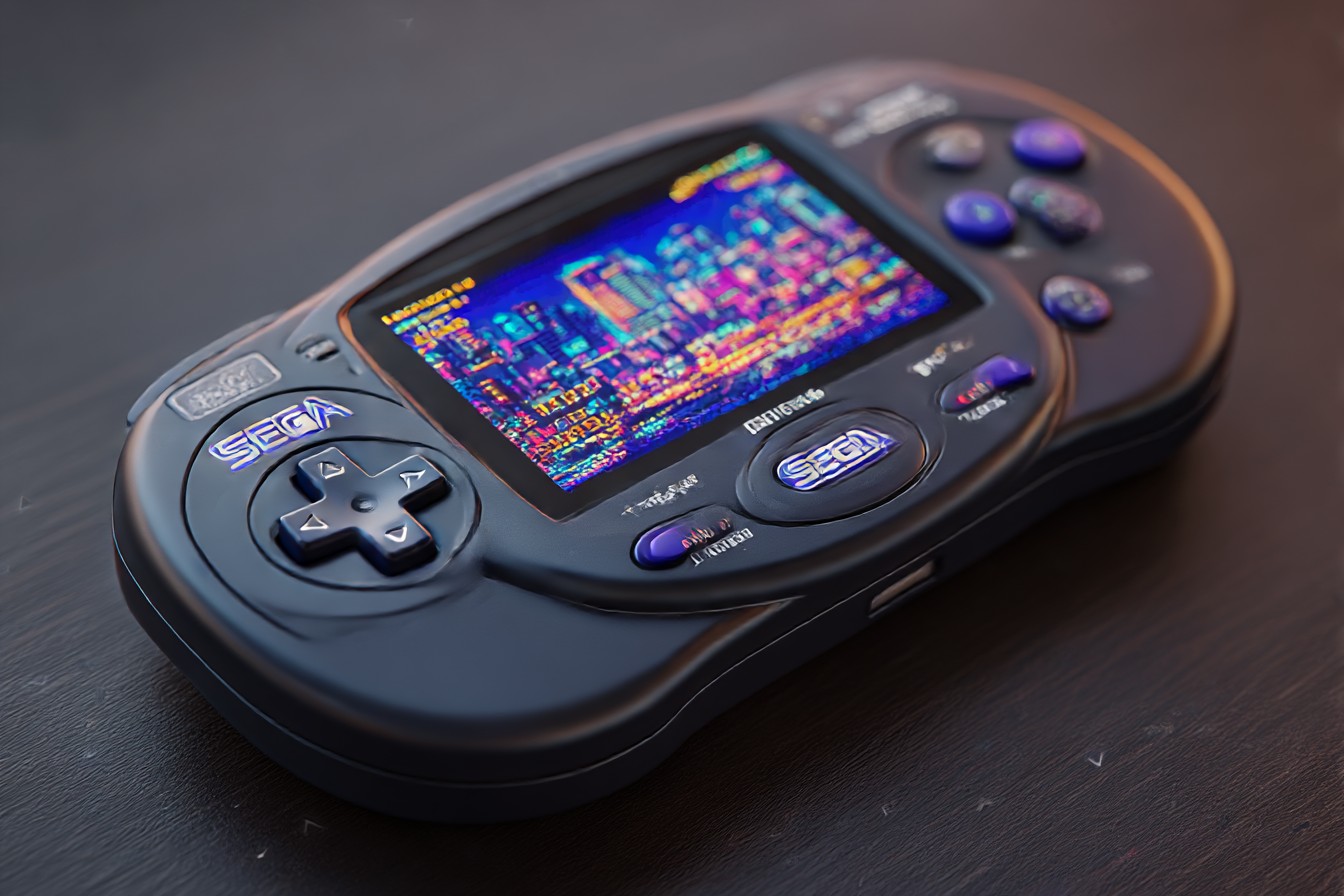
And that's where it got really interesting. See, Sega included a second controller port on the back. Mental, right? You could actually play two-player games on a handheld. I remember trying Streets of Rage with a mate, both of us hunched over this little screen like we were performing surgery. Ridiculous setup, but it worked. Sort of. Your neck would kill you after ten minutes, but the principle was sound.
The build quality was proper Sega, which means it felt like it could survive a nuclear war but looked like it was designed by someone who'd never heard of ergonomics. Thick, chunky, imposing—it had that same industrial aesthetic as the Genesis itself. No curves, no friendly edges, just pure function wrapped in black plastic. I loved it, personally. Felt serious. Important.
Battery life remained the elephant in the room, though. Six AAs lasting two hours made this thing more expensive to run than my sister's Tamagotchi habit. I worked out once that a decent gaming session cost more in batteries than renting a game for the weekend. Mad, really. But then someone's older brother showed up with a car adapter cable, and suddenly the Nomad made perfect sense. Long car journeys transformed from staring-out-the-window torture sessions into mobile gaming marathons.
The timing was everything, though. This came out in 1995, right when the Saturn and PlayStation were launching, and suddenly 16-bit felt old hat. Nobody was talking about Genesis games anymore—it was all Ridge Racer this, Virtua Fighter that. Poor old Nomad got caught in the crossfire of the 32-bit transition, which is tragic because as a piece of hardware, it was genuinely ahead of its time.
Think about it: portable console gaming that didn't compromise the experience wouldn't become mainstream until the Switch, and that's twenty-two years later. The Game Boy approach—simpler games designed specifically for handheld play—dominated for decades because it made sense. Longer battery life, cheaper production, games that worked with the limitations. But Sega said "sod that, let's just make it portable," and somehow pulled it off.
I still fire mine up occasionally, usually when I'm feeling nostalgic about battery anxiety. There's something wonderfully pure about the experience—no save states, no rewind functions, no modern conveniences. Just you, the game, and the creeping dread that the battery indicator is starting to blink. It focuses the mind, you know? No casual exploration when every minute counts.
The screen holds up better than you'd expect, too. Obviously it's no modern LCD, but it's sharp enough and the colors still pop. Sonic's blue fur doesn't look muddy, the green hills of Emerald Hill Zone still sparkle, and that ridiculous casino level in Sonic 2 still makes your eyes water with all the flashing lights. Good stuff.
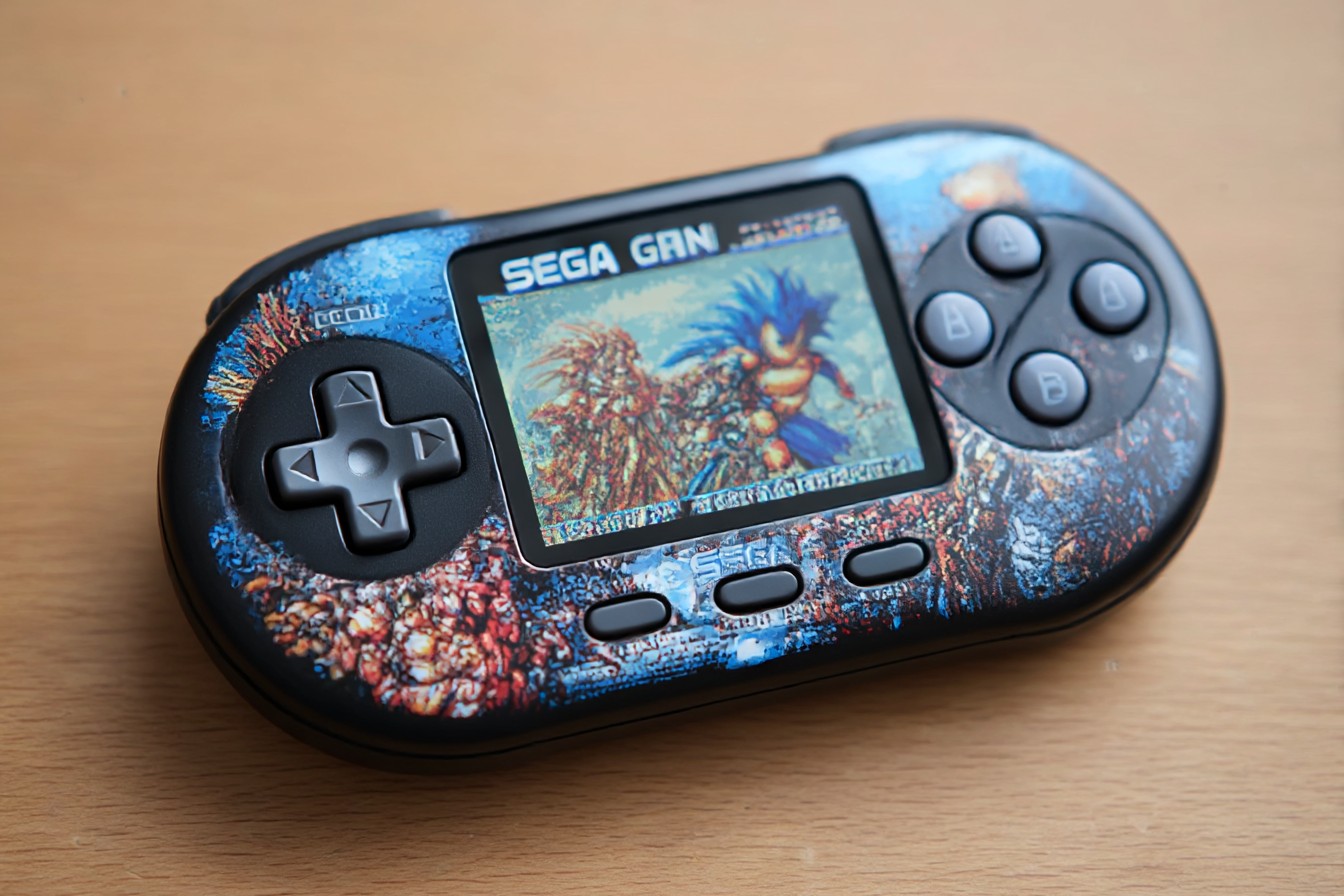
What strikes me most about the Nomad now is how confident it was. This wasn't Sega hedging their bets or testing the waters—this was them saying "our console library is good enough to work anywhere." And they were right. Those Genesis games, the proper classics, they translated beautifully to handheld play. Gunstar Heroes felt just as frantic, Shinobi III just as precise, Streets of Rage 2 just as satisfying.
It failed commercially because the world wasn't ready for it. Too expensive, too power-hungry, too late in the Genesis lifecycle. But as a statement of intent, as proof that handheld gaming didn't have to mean compromised gaming? Absolute genius. The Nomad proved something important: good games work everywhere, regardless of screen size or power source.
These days, with decent emulation handhelds and the Switch proving portable console gaming can work, the Nomad looks less like an oddity and more like a prophet. Sega saw the future, built it, and watched it die because the technology wasn't quite ready for the vision.
Brilliant, mad, typically Sega. And I still love it for that.