
The Add-On That Proved CD Gaming Was Coming, But Cost Too Much to Get There
I am a history teacher from Phoenix who has been a fan of Sega since I was a kid. I have argued over many years that Sega got the shaft in terms of the timing of the market and that Sega made better business decisions than people are willing to admit. I will never stop saying that “blast processing” is a legitimate term even if everybody else thinks I am crazy. The Sega CD is a prime example of Sega having the right idea about where the gaming industry was heading, but the wrong idea about what the current state of affairs was. The Sega CD (also known as the Mega-CD outside of North America) was a CD-ROM peripheral for the Sega Genesis/Mega Drive that came out in the early 1990s as a way to provide more memory for the addition of full-motion video, improved audio, and larger games. It lost money in the marketplace. However, it did prove that the gaming industry was going to move to CD-ROM technology before Sony made the transition with the PlayStation.
Statistics for Sega CD Games
| Specification | Details |
|---|---|
| Release in North America | October 15, 1992 |
| Release in Japan (Mega-CD) | December 12, 1991 |
| Release in Europe | April 1993 |
| Launch Price in North America | $299 |
| Price Cut (in 1995) | $159 |
| Model 2 Price | $229 |
| Japanese Launch Price | ¥49,800 |
| European Launch Price | £270 |
| Worldwide Sales (conservative) | 2.24 million units |
| Worldwide Sales (with various models) | Up to 6 million units |
| Number of Games Available | 216-260 |
| Processor Added | Ricoh RF333C (Motorola 68000) at 12.5 MHz |
| RAM Added | 256 KB (512 KB Model 2) |
| CD Capacity | 540 MB |
| Most Sold Game | Sonic CD (1.5 million units) |
| Genesis Installed Base | 30+ million |
| Attach Rate of Sega CD | 7-10% of Genesis owners |
| Timeline of Production | 1991-1996 |
The Vision: How Sega Saw the Future of CD-ROM Technology
The Sega CD was launched in Japan on December 12, 1991, at ¥49,800 with very strong initial sales of 200,000 units in the first 3 months. Clearly, Sega was able to envision the future. Cartridges had reached their limits in terms of size and cost. Cartridges were expensive to produce. They had limited capacity. They were specific to the individual console. CD-ROM technology was inexpensive, had massive capacity, and was rapidly becoming a standard in consumer electronics. Sega realised that CD-ROM gaming was the future. The problem was that Sega tried to demonstrate the feasibility of this future before the rest of the market was prepared to recognise its inevitability.
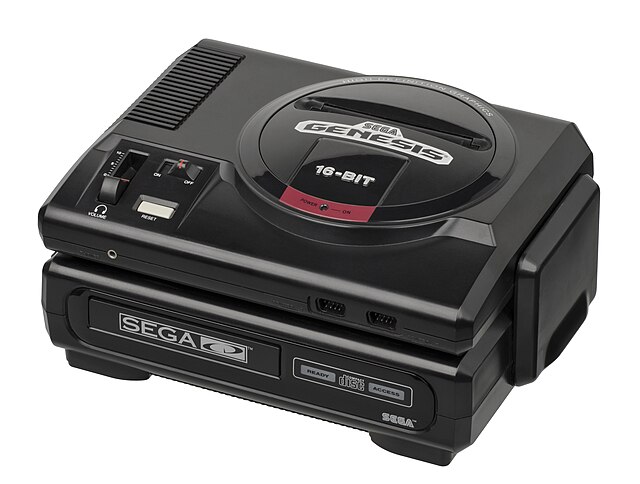
The Sega CD was not intended to replace the Genesis; it was intended to extend it. You connected the CD-ROM drive to the top of your Genesis and then you had a new console. Games could now include full-motion video. Games could now include CD audio tracks. Games could now be significantly larger than the typical cartridge game. The add-on tray-loading CD-ROM drive was located on top of the Genesis or below it and connected via the expansion port, providing a unique combination of technical innovation and practical inconvenience.
In hindsight, Sega’s timing was strategic, but ultimately premature. The PlayStation was not introduced until 1994 in Japan and 1995 in North America. At the time the PlayStation demonstrated the feasibility of CD-ROM gaming dominating the marketplace, Sega had already endured years of declining sales of the Sega CD and negative perceptions of the product. Sega was correct in recognising the direction of the gaming industry. They simply arrived at the destination a little earlier than the market was prepared to accept.
Hardware: Twice the Speed Added to the Same Old System
The Sega CD added a Ricoh RF333C (custom Motorola 68000) at 12.5 MHz, which was twice as fast as the Genesis, plus a HuC6280 audio processor at 7.67 MHz for CD-DA and ADPCM. It also included 256 KB of main RAM (512 KB on Model 2), 64 KB of CD-ROM cache, and 6 KB of boot RAM, while utilising the Genesis’ RAM as well.
The method by which the PlayStation advanced the gaming industry, as compared to how the Sega CD did so, is critical. Sony built an entirely new gaming system from the ground up. Sega built an add-on onto an existing system. Although the ability to upgrade an existing Genesis was a positive aspect of the Sega CD, the fact that the Sega CD was always going to seem like an add-on and never a unified system was a significant drawback.
The Sega CD utilised the Genesis VDP but added support for FMV decoding, supporting 320×240 interlaced video and CD-Graphics overlay. Therefore, games were able to provide full-motion video cutscenes, something cartridge games could not accomplish. Games such as Night Trap utilised FMV to a great extent, thus creating a gaming experience that was distinctively different from cartridge based games.
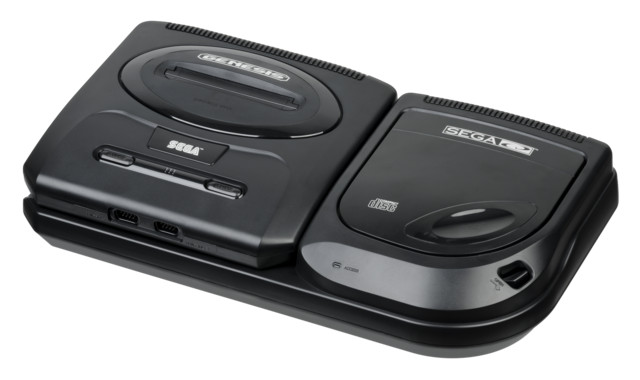
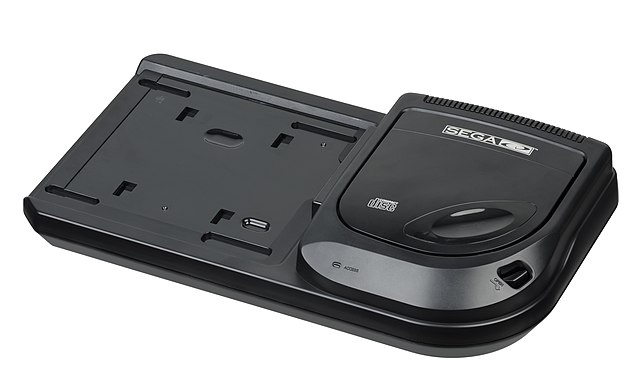
Sega produced two primary versions of the Sega CD. The Model 1 (1991-1993) was larger with a horizontal tray and a noisy drive. The Model 2 (1993-1996) was smaller with a quiet drive, a top-loader option, and a lower price of $229. The Model 2 provided solutions to some of the complaints regarding the Model 1; however, the harm had already been done. Early adopters had already decided that the Sega CD was not worth purchasing.
The Reality of Sales: Not As Bad As People Say, But Still a Failure
There are wide discrepancies in the reported sales data for the Sega CD depending upon the source. This is a further complication to the Sega CD’s reputation. According to Wikipedia, the official reported sales data of 2.24 million units worldwide represent the most commonly cited conservative estimate of sales data. According to VG Digest and Sega Classics blog data, the estimated sales may have exceeded 6 million units, including all variations of the Sega CD.
It is likely that the actual sales of the Sega CD fall somewhere in between the two estimates; however, the highest estimate of sales represents a commercial failure with regard to the 30+ million unit installed base of the Genesis. The Sega CD represented a 7-10% attach rate to the Genesis owners. Therefore, 90% of the Genesis owners thought that the Sega CD was not worth purchasing.
Analysing the sales data from the standpoint of geographic location helps illustrate the issue. In Japan, Sega CD sold 200,000 units in the first three months after introduction, but sales dropped off dramatically, with estimates of Japanese sales totalling approximately 850,000 units over the course of its life cycle. In North America, estimates of the total sales of the Sega CD ranged from 1.5 million units, with the price drop to $159 by 1995 and the bundling of products helping to increase sales during the latter half of the product’s life cycle. In Europe, by the end of August 1993, only 60,000 of 70,000 shipped units had sold, indicating a catastrophic launch. Brazil purchased around 30,000 units through Tectoy licensing.
The statistics above are important because they indicate that the Sega CD failed in virtually every major market throughout its existence. This was not a regional failure; it was a global failure. Everybody said no to the Sega CD, and the majority of those individuals continued to say no even as Sega lowered the price and introduced new versions.
The Problems: High Price, Poor Reliability, and Very Poor Launch Games
There were four fundamental problems with the Sega CD. The first problem was the high price. The North American retail price of the Sega CD was $299 at the time of the product’s release. This is an astronomical sum of money for an add-on in 1992. You could buy a brand new Genesis for $299, a brand new Super Nintendo Entertainment System (SNES) for $299, or the Sega CD. Most consumers opted to choose one of the other options instead of upgrading their Genesis with the Sega CD.
The second problem was the reliability of the hardware. The Model 1 tray-loading drive was notoriously prone to mechanical failure. The loading times for the Sega CD were long. Many users experienced drive failure within a short period after purchase. The later Model 2 addressed some of the issues associated with the Model 1 with a quieter and more reliable drive; however, by that point in time the damage to the Sega CD’s image had already occurred.
The third problem was the poor quality of the launch games. The launch games were not good. The hype surrounding the launch games greatly exceeded the quality of the games themselves. Sega believed that FMV was a key selling feature that would justify the expense of the hardware. Unfortunately, FMV became a fad that rapidly lost appeal. Once you watched the same video clip a couple of times, the novelty wore off. You were left with a shallow and repetitive game that had no redeeming qualities.
The fourth problem was competition. Cartridge games on the Genesis and SNES were still producing high-quality experiences. What would compel someone to pay $300 for an add-on that offered a vague promise of next generation gaming when you could spend $60 for a new cartridge that delivered a proven gaming experience? The value proposition did not exist.
The Games: Some Gems, But Mostly Disappointment
The Sega CD library eventually reached 216-260 titles across all regions. The best-selling game was Sonic CD with 1.5 million copies sold, which proves that when the Sega CD had genuinely good games, they sold. Sonic CD included alternate paths and time lines that added variety to the traditional Sonic the Hedgehog formula. The music for the game was extremely well done and contributed greatly to the overall enjoyment of the game. It is a legitimate great game.
However, while Sonic CD represented one of the best examples of what the Sega CD had to offer, it was not representative of the majority of the Sega CD library. Many games developed for the Sega CD relied heavily on Full Motion Video (FMV). However, the attempts to develop games that used FMV as the primary gameplay mechanic were unsuccessful. While many arcade-style games were released for the Sega CD, the inclusion of FMV cut scenes in these games resulted in bloat and negatively impacted the overall quality of the titles.
Some games, such as Final Fantasy and Lunar, were released for the Sega CD and utilised CD audio and storage to provide additional content beyond what was available in cartridge versions of these games. While these games were superior to their cartridge counterparts, they did not represent a significant improvement. The games represented the possibility of what CD gaming could achieve; however, due to the hardware limitations of the Genesis, they did not realise their full potential.
The issue with the Sega CD was philosophical. Developers, both Sega and third-party, did not understand how to design games that were optimised for CD-ROM storage. Instead, they believed that the addition of CD-ROM capabilities would allow for the creation of games that included FMV and CD audio. What developers missed was the fact that the true advantages of CD-ROMs lay in the increased storage space provided for games and the ability to include more complex gameplay elements. The introduction of the PlayStation and Final Fantasy VII showed that massive game worlds and hundreds of hours of content were possible when using CD-ROMs; however, these types of games required completely new hardware platforms to operate efficiently.
Why It Was Unsuccessful: Right Idea About the Future, Wrong Timeframe
The Sega CD was an unsuccessful product for Sega because it was ahead of its time with respect to gaming trends, but behind the marketplace in terms of acceptance of CD-ROM gaming. The Sega CD was discontinued around 1996 as Sega shifted its focus to the Saturn, another underperforming console. By 1996, Sega had effectively abandoned the Sega CD and was beginning preparations for the next generation of consoles.
At the same time, the PlayStation had already demonstrated that CD-ROM gaming was commercially viable. Sony had built a completely new console around CD-ROM technology, and the market had accepted it. Sega attempted to do the same thing years before and failed. The key differences between the two companies’ approaches were timing, quality of games, marketing and execution.
Sega stopped developing internal software for the Sega CD in 1993, which meant that Sega was no longer creating killer app style games that would demonstrate the potential of the Sega CD. If the company that designed the hardware could not commit to producing the type of games that would show off the potential of the hardware, why should third-party developers?
Another major issue with the Sega CD was the design of the hardware. Unlike other consoles that were released as separate products, the Sega CD was an add-on to the existing Sega Genesis console. As a result, the Sega CD competed directly with the Genesis for developer interest. Why would a developer spend the resources to create a game for the Sega CD when they could create a Genesis game that could reach ten times the install base of the Sega CD? Due to the attached nature of the hardware, the Sega CD would always be limited to a portion of the install base of the Genesis, which meant that there would always be doubt about the commercial viability of Sega CD games.
What the Sega CD Demonstrated
Although the Sega CD failed commercially, the product demonstrated several important concepts. It demonstrated that CD-ROM gaming was possible and would become increasingly popular in the future. It demonstrated that it was feasible to implement Full Motion Video (FMV) in consumer gaming products. It demonstrated that CD audio could improve the overall gaming experience. It demonstrated that the larger capacity of CDs allowed for the creation of games that were much larger than cartridges.
In comparison to other high-end gaming peripherals released during the 1990s, the Sega CD performed relatively well. Although the 3DO sold only 2 million units and the Atari Jaguar CD sold only 20,000 units, the Sega CD had a higher attachment rate and sale numbers. This demonstrates that among the premium gaming add-ons of the 1990s, the Sega CD was relatively successful. Unfortunately, even though the Sega CD was successful relative to other failed products of the time, it was still a commercial failure.
The Sega CD demonstrated that in order for a premium gaming add-on to be successful, developers needed more than just larger storage capacity. They needed games that were worthy of the cost of the add-on. They needed reliable hardware. They needed the correct timing. They needed support from first-party developers. The Sega CD had none of these factors, except for larger storage capacity.
Legacy: A Platform that Paved the Way for the PlayStation
The Sega CD laid the groundwork for future CD-ROM experiments for the Saturn and PlayStation, and also laid the groundwork for Sony and Sega’s eventual collaboration discussions, although ultimately those discussions came to nothing. Sega had the correct understanding of the future direction of gaming; unfortunately, they did not have the correct approach to implementing that vision. Sony, on the other hand, learned from Sega’s mistakes and went on to build the PlayStation as a single CD-ROM based console instead of an add-on.
In that sense, the Sega CD’s greatest contribution to the gaming community was demonstrating what a successful CD-ROM gaming console would need to look like, and the PlayStation was the direct response to the Sega CD’s shortcomings. The PlayStation became incredibly popular in a way that the Sega CD never could.
Does It Still Have Value Today?
While playing games for the Sega CD today will likely feel like an exercise in nostalgia, the experience is still somewhat interesting historically speaking. Sonic CD remains a solid game today. The music in the game is excellent and contributes to the overall enjoyment of the game. The gameplay in Sonic CD has aged very well too.
On the other hand, most of the Sega CD library does not age as well. FMV games are comical now. The compression applied to the video to fit it onto the Sega CD results in video that looks terrible by today’s standards. The gameplay underlying the FMV is typically weak too. Games that based their entire value proposition on FMV cutscenes feel empty today because we can experience far better video and storytelling through other forms of media.
The real value of the Sega CD as a piece of gaming history is that it represents a dead-end in terms of evolution. The Sega CD was Sega’s attempt to bridge the gap between cartridge gaming and CD gaming. It failed, but it taught the gaming community what would not work and established what would.
Conclusion
The Sega CD was a costly peripheral released at the wrong time, with the wrong games, and poor-quality hardware. Depending on how you count the units sold, the Sega CD sold anywhere from 2.24 to 6 million units. Regardless of the number, it represents a failure relative to the Genesis’s 30+ million unit install base. Less than 10 per cent of Genesis owners thought that spending $299 for a Sega CD was worthwhile.
However, the Sega CD was also a proof-of-concept. It demonstrated that CD-ROM gaming was on its way. It demonstrated that it was possible to implement Full Motion Video (FMV) on consumer hardware. It demonstrated that CD audio could enhance the gaming experience. It demonstrated that the large storage capacity of CDs could lead to games that were much larger than cartridges.
Unfortunately, the Sega CD could not overcome the costs associated with the peripheral, the unreliability of the hardware, the poor selection of launch titles, and the lack of commitment from developers. These issues were fatal. Even though Sega lowered the price of the Sega CD and improved the quality of the hardware, the damage had been done. The market had spoken. They did not want the Sega CD.
Perhaps the biggest irony is that the Sega CD turned out to be correct regarding every aspect of gaming except for timing. Three years after the release of the Sega CD, the PlayStation arrived and demonstrated that CD-ROM gaming could become dominant. Sega attempted to follow in the footsteps of Sony and failed. It does not matter how correct your vision is if you cannot execute it in the current timeframe.
Rating: 6/10 — Correct Vision of the Future, Catastrophic Execution


