I’m forty-seven years old and I still can’t get that damn Song of Healing out of my head. Four simple notes that somehow managed to burrow into my brain back in 2000 and set up permanent residence. My wife caught me humming it while balancing our checkbook last week – she just shook her head and muttered something about “that weird Zelda game” under her breath. Twenty-four years later and Majora’s Mask is still messing with my head in ways no other game has managed.
Here’s the thing nobody talks about enough – this game wasn’t supposed to exist. Not really. Nintendo basically said “hey, let’s take Ocarina of Time’s engine and make something completely different in twelve months” which is like asking someone to write a novel using only the words from yesterday’s newspaper. What they ended up creating was the darkest, most psychologically complex thing Nintendo has ever put their name on, and I’m still not entirely sure how it got past the focus groups.
I bought my copy from the local Babbages on release day – remember when games actually came out on specific days and you had to physically go get them? The clerk, this college kid who knew me from all my weekend visits, actually asked if I was sure I wanted it. “Heard it’s pretty weird, man. Like, really weird.” Weird was putting it mildly. This was Nintendo doing psychological horror wrapped up in that familiar green tunic, and it caught everyone off guard.
The three-day cycle broke my accountant brain the first time I experienced it properly. Here I was, used to games that moved forward in predictable patterns – complete dungeon, get item, move to next area. But Termina operates on its own schedule whether you’re paying attention or not. Every single NPC has their own life, their own problems, their own personal disasters playing out on an endless loop. I’d spend entire cycles just following people around, watching their routines, learning their stories. My kids think this sounds incredibly boring, but there was something hypnotic about it.
That postman still haunts me. Poor bastard running his routes with military precision while the world literally ends around him. “I have a job to do!” he shouts, even as that horrifying moon bears down on Clock Town. There’s something deeply unsettling about that level of dedication to routine in the face of apocalypse. Most games would’ve played it for laughs, but Majora’s Mask lets the tragedy of it sink in. The guy’s entire identity is tied up in delivering mail, and even the end of the world can’t shake him from that purpose.
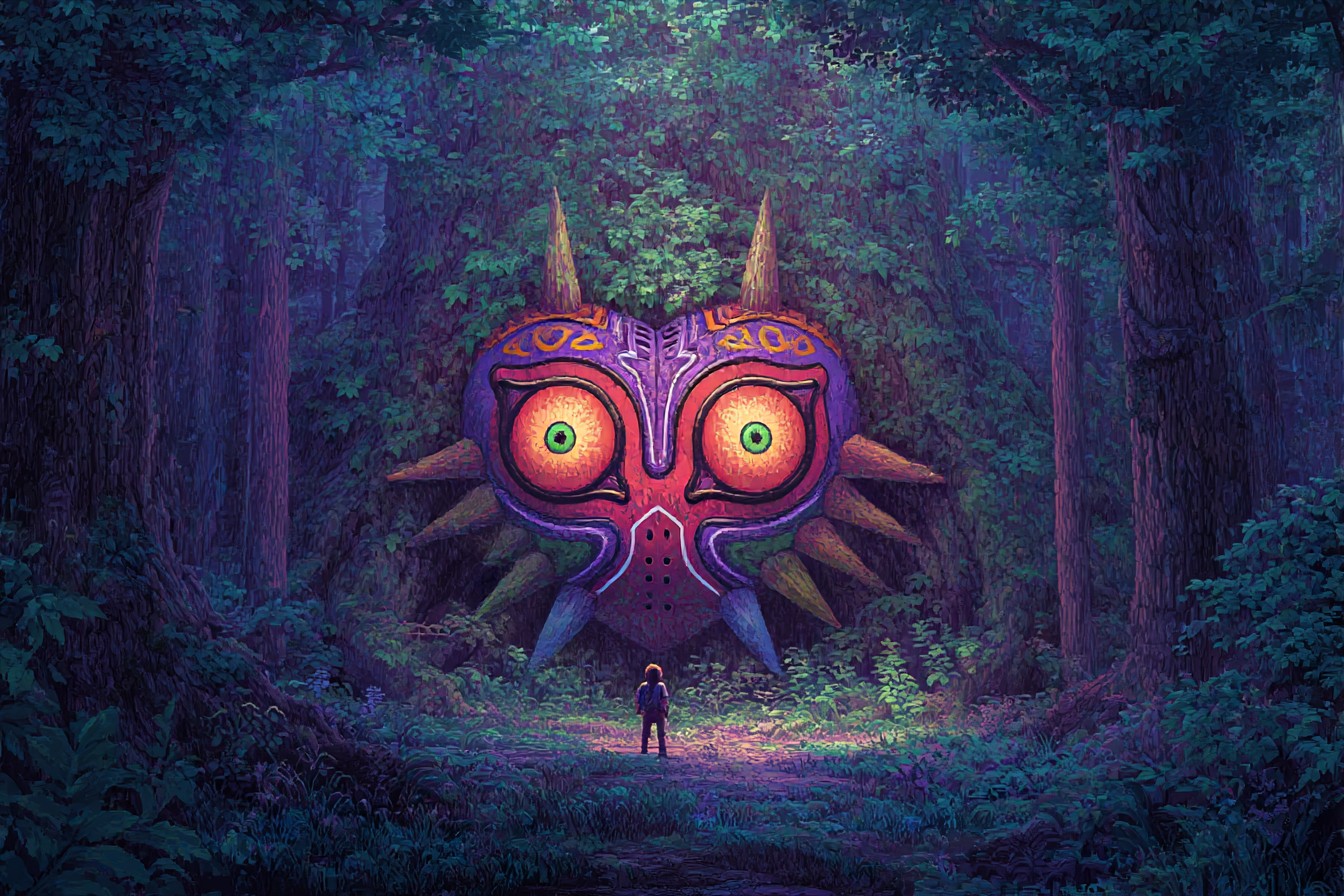
The transformation masks were brilliant and absolutely horrifying at the same time. Sure, turning into a Deku Scrub or rolling around as a Goron felt empowering – new abilities, different ways to navigate familiar spaces. But the game never lets you forget what these masks actually are. They’re not power-ups. They’re the lingering essence of dead people. Link isn’t collecting items, he’s literally wearing the faces of the recently deceased. That scream when you put on the Deku Mask for the first time… Jesus. That’s not something you expect from a game with Pikachu on the same system.
I spent hours – actual hours – just watching Anju go through her daily routine. Following her around Clock Town, seeing how her relationship with Kafei played out across different timelines. The attention to detail was insane. She’d check her mail at exactly the same time each day, her posture would change subtly when she realized Kafei wasn’t coming back. These weren’t just quest dispensers spouting dialogue. They felt like actual people with interior lives that continued whether I was there to witness them or not.
But that moon, man. Whoever at Nintendo decided to give it that face deserves both a raise and immediate psychological counseling. It’s not just a countdown timer hanging in the sky – it’s this malevolent presence gradually taking up more and more of your field of vision, watching everything with those dead, soulless eyes. I’ve played actual horror games that couldn’t match the creeping dread of watching that thing slowly descend over three days. The way it reflects in puddles, casts longer shadows as it gets closer… Pure nightmare fuel designed for children.
Stone Tower Temple almost made me quit gaming entirely. Not because it was hard – though that upside-down section had me questioning my sanity and my patience – but because of what it represented thematically. This was a dungeon built by an ancient civilization that literally tried to reach heaven through violence and conquest. The entire structure is a middle finger to the gods, and you can feel that blasphemous energy in every single room. When you flip it with the Light Arrows, it’s not just a clever puzzle mechanic. It’s divine judgment made interactive.
What gets me about replaying it now – I’ve got it running on my Everdrive 64, because original cartridges are stupidly expensive – is how it predicted so much of where gaming would go thematically. The way it deals with mental health, trauma, grief, healing… these weren’t topics video games talked about in 2000. Most games were still figuring out basic storytelling, and here’s Nintendo creating this meditation on loss and recovery that feels more relevant today than it did back then. Every character you help isn’t just completing a sidequest – they’re working through legitimate psychological damage.
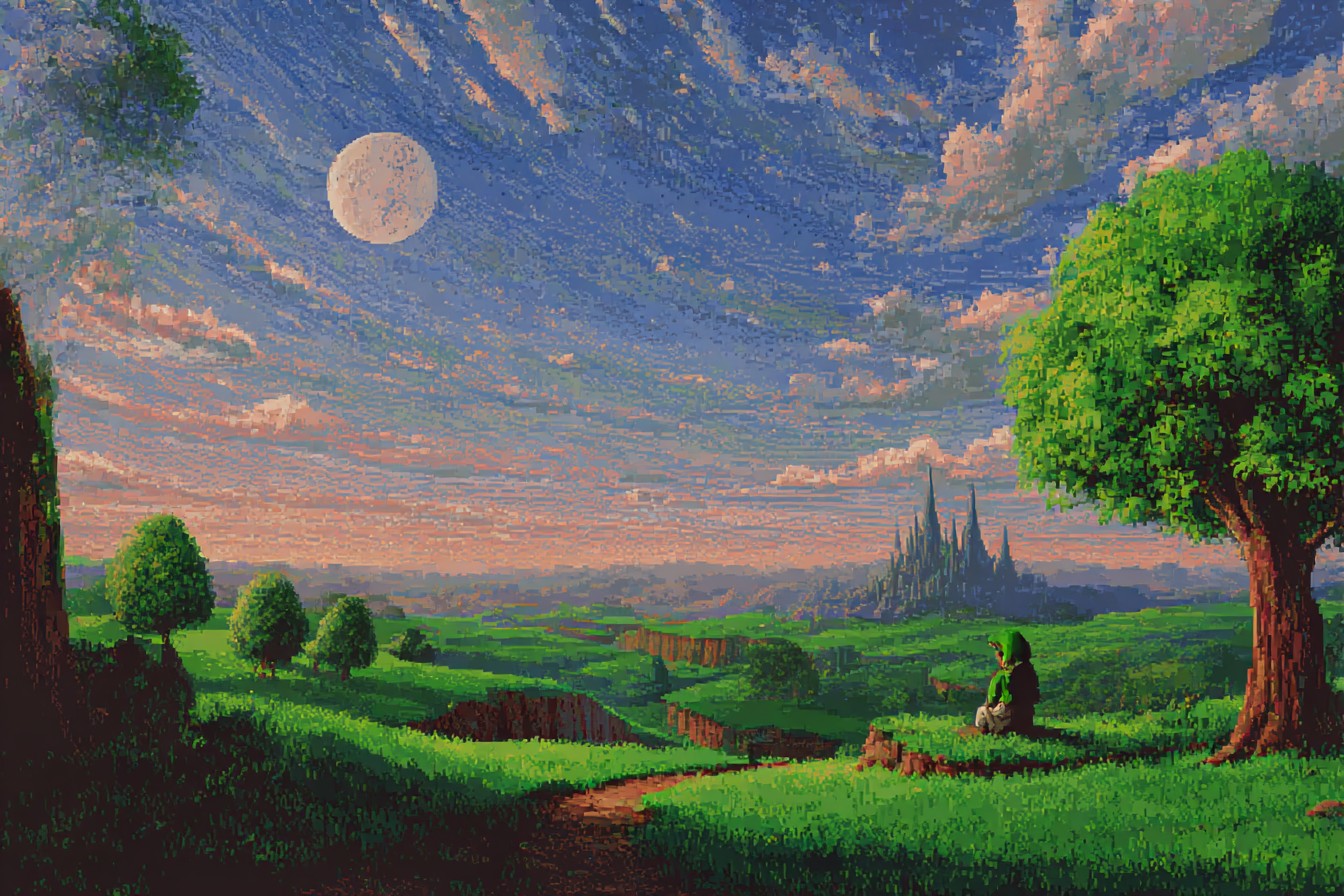
The Song of Time became more than just a reset button. It was time travel therapy. Made a mistake? Go back and try a different approach. Couldn’t save someone? Reset the timeline and try again with new knowledge. But here’s where the game got really clever – knowledge carried forward, but relationships didn’t. You’d form these genuine connections with NPCs only to watch them completely forget you existed when the cycle restarted. It was heartbreaking in a way most games never even attempted to be.
The ending still gets me emotional, and I’m a middle-aged accountant from Minneapolis who cries maybe twice a year. Not the boss fight – though Majora’s final form was appropriately insane – but that credits sequence. Watching everyone you’d helped throughout your dozens of cycles finally living their best lives in the timeline where the world didn’t end. The postman getting his well-deserved vacation. Anju and Kafei having their wedding. Even the Deku Butler finding peace with his son’s death. It felt earned in a way that most happy endings don’t manage.
Playing it on original hardware still gives me chills twenty-four years later. That Expansion Pak wasn’t just enabling better graphics and more content – it was powering one of the most ambitious experiments in interactive storytelling Nintendo ever attempted. Sure, it caused frame rate drops and the occasional hard crash, but that felt appropriate somehow. Even the hardware was being pushed to its absolute limits trying to contain this beautiful, terrifying fever dream.
Majora’s Mask remains Nintendo’s boldest Zelda experiment because it trusted players to handle genuine complexity. Death, grief, mental illness, the crushing weight of responsibility – themes that most developers still won’t touch, presented through the familiar framework of a hero saving a kingdom. It proved Nintendo could do dark without being edgy, could handle mature themes without being pretentious about it. Twenty-four years later, nothing else feels quite like it. That Song of Healing is still working its magic, even when I’m humming it unconsciously while doing our taxes, wondering how a video game about time loops became such a perfect metaphor for trying to heal a broken world one small act of kindness at a time.

Samuel’s been gaming since the Atari 2600 and still thinks 16-bit was the golden age. Between accounting gigs and parenting teens, he keeps the CRTs humming in his Minneapolis basement, writing about cartridge quirks, console wars, and why pixel art never stopped being beautiful.