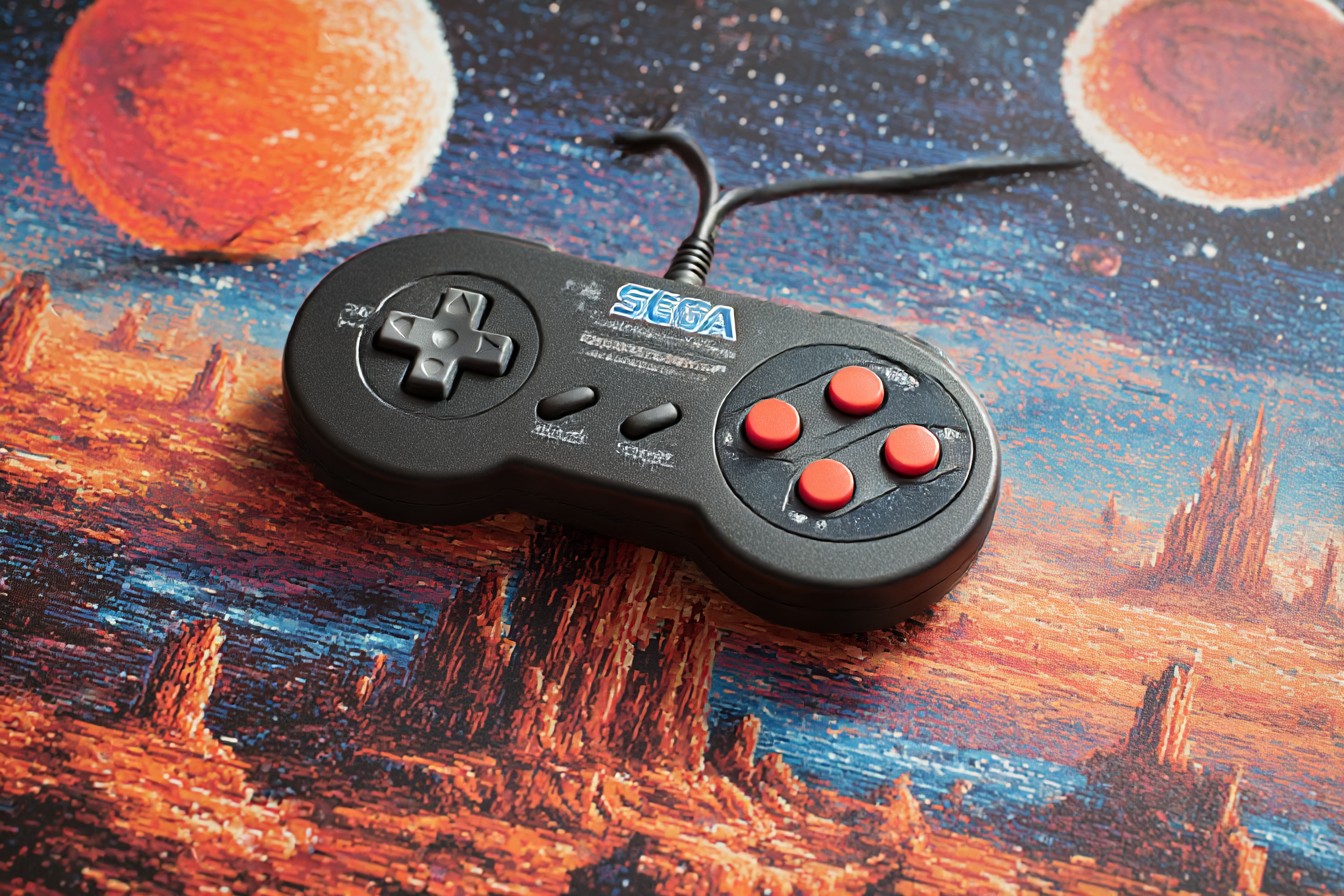
I’ve got this muscle memory thing that happens every time I pick up a Sega six-button controller. My thumb just automatically finds those three top buttons—X, Y, Z—without me even thinking about it. It’s been like thirty years since I first held one of these things, and my hands still remember exactly where everything goes. That’s not nostalgia talking, that’s just good design burned into my nervous system.
Back in ’93, I was fifteen and absolutely obsessed with Street Fighter II on my Genesis. The three-button pad that came with the system was… well, it was fine for Sonic, I guess. But trying to play a real fighting game with it? Forget about it. You had to use the shoulder buttons for your heavy attacks, which meant contorting your hands into these weird positions just to throw a decent fireball. My friend Mike had gotten the six-button controller for Christmas, and the first time I used it at his house, I knew I had to have one.
Took me three weeks of doing extra chores and pestering my parents, but I finally saved up the forty bucks. Walked into Electronics Boutique at the mall, bought that chunky gray controller, and immediately felt like I’d upgraded to professional gaming equipment. The thing was noticeably heavier than the three-button pad—substantial, you know? Like it meant business.
The button layout was pure genius, and I don’t use that word lightly when talking about Sega because they screwed up plenty of other things. Light punch, medium punch, heavy punch across the top. Light kick, medium kick, heavy kick on the bottom. It mirrored the arcade setup perfectly, which meant all those quarter-circle motions I’d been practicing at the local pizza joint actually translated to home play. No more awkward shoulder button reaching, no more missed Dragon Punches because I couldn’t coordinate three different hand positions.
What really impressed me was how comfortable the spacing felt. Sega could’ve just crammed six buttons together and called it a day, but they actually thought about thumb ergonomics. The buttons were close enough that you could hit combinations without stretching, but far enough apart that you wouldn’t accidentally mash the wrong inputs during intense matches. My younger sister tried using it once and complained that her thumbs were too small, which honestly just made me feel more mature about the whole thing.
I still have that original controller sitting in my basement game room. Twenty-nine years later, and the buttons still have that perfect tactile click. The D-pad’s gotten a little mushy over the decades, but everything else feels rock solid. These things were built like tanks—proper engineering with chunky microswitches that were designed to withstand thousands of Hadokens and Sonic Booms.
Street Fighter II: Champion Edition became completely different game once I had proper controls. Suddenly I could execute Chun-Li’s Lightning Legs consistently, could nail Blanka’s electricity move without cramping my hand, could actually compete with my friends instead of losing because of control limitations. The difference was night and day. We’d have these epic matches that went on for hours, and the controller never felt uncomfortable even during marathon sessions.
But here’s what people don’t always remember—the six-button pad wasn’t just about fighting games. Streets of Rage 3 used those extra buttons for different special moves. Some RPGs mapped quick item access to the additional inputs. Even regular platformers felt better because you had more options at your fingertips. It was like having a Swiss Army knife instead of just a regular knife, you know?
The D-pad deserves special mention too. Nintendo fans love to go on about their D-pad, and yeah, it was good. But Sega’s D-pad on the six-button controller had this perfect balance of precision and comfort that was ideal for fighting games. Just the right amount of resistance for quarter-circle motions, clicky enough to feel responsive without being stiff. I could do Ryu’s fireball motion all day without my thumb getting sore.
That little Mode button was brilliant too. Press it once to switch between three-button and six-button modes for games that couldn’t handle the extra inputs. Sega was thinking about backward compatibility before anyone else cared about it. Meant I could play my entire Genesis library with one controller instead of keeping multiple pads around.
Looking back, the timing couldn’t have been better. This was right when arcade-perfect fighting games were becoming possible on home consoles, and serious players weren’t going to accept compromises on controls. Sega delivered exactly what we needed when we needed it. They understood their audience in a way that honestly surprised me, given how badly they’d mess up controller design later with the Saturn’s initial three-button pad disaster.
The influence of this controller design is everywhere if you know what to look for. The Saturn’s eventual six-button pad was basically a refined version of this. Modern arcade sticks still use that three-by-two button layout. Fighting game pads today follow the same basic principles Sega established in 1993. They got it right the first time, and everyone else has been copying them ever since.
What I love most about the six-button controller is how purposeful everything feels. There’s no wasted space, no unnecessary features, no gimmicks. Just six perfectly positioned buttons, an excellent D-pad, and a start button. Every element serves a clear function. It’s elegant design disguised as a chunky piece of 90s gaming hardware.
These days, when I’m playing Street Fighter II in my basement on my carefully maintained Genesis setup, I still reach for that original six-button pad. Sure, modern controllers have wireless connectivity and rumble and all sorts of fancy features. But they can’t replicate the specific weight and feel of those buttons under your thumbs, the satisfying feedback of nailing a perfect combo, the pure tactile joy of using a controller that was designed to excel at one specific thing.
That’s what made Sega special during their hardware days—when they focused on doing something well, they could absolutely nail it. The six-button controller wasn’t trying to be everything to everyone. It was trying to be the perfect fighting game controller for home consoles, and honestly? Mission accomplished. Still the best controller I’ve ever used for 2D fighters, and I’ve tried them all.

Joe’s a history teacher who treats the console wars like actual history. A lifelong Sega devotee from Phoenix, he writes with passion, humor, and lingering heartbreak over the Dreamcast. Expect strong opinions, bad puns, and plenty of “blast processing.”